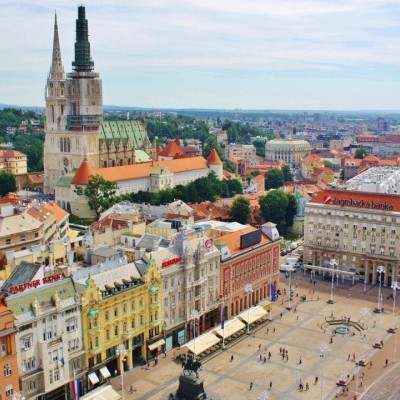
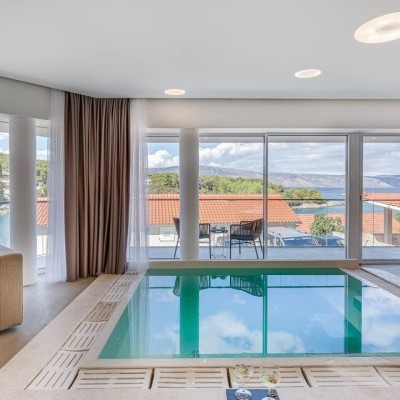
Buying property in Croatia has become increasingly popular among foreign buyers thanks to the country's stable real estate market, attractive locations, and exceptional quality of life. In recent years, Croatia has established itself as one of Europe's most desirable destinations for purchasing real estate, whether for private use, holiday homes, or investment purposes.
Although the purchasing process is transparent and clearly regulated, foreign buyers must complete several legal and administrative steps, which may vary depending on their nationality.
In this guide, we provide a clear, step by step overview of the entire property purchase process in Croatia, from the initial planning stage to the registration of ownership.
Who Can Buy Property in Croatia?
The rules depend on the buyer's nationality.
1. Citizens of the European Union (EU)
Citizens of EU Member States may purchase real estate in Croatia under the same conditions as Croatian citizens. No special approval is required, except when purchasing agricultural land or certain protected properties where specific restrictions may apply.
2. Non EU citizens
Non EU citizens may also purchase property in Croatia, but in most cases an additional approval is required.
Generally, they must obtain the consent of the Croatian Ministry of Justice, Public Administration and Digital Transformation before ownership can be registered.
The approval procedure is based on the principle of reciprocity, meaning Croatia verifies whether Croatian citizens are allowed to purchase real estate in the buyer's home country.
Step by Step Guide to Buying Property in Croatia

Although purchasing a property abroad may initially seem complicated, the Croatian property acquisition process is well regulated and follows a clearly defined procedure.
Step 1: Define Your Budget and Purchase Goals
Before you begin searching for a property, it is important to determine:
- your maximum budget
- the purpose of the purchase (permanent residence, holiday home, investment, or tourist rental)
- your preferred location
- the type of property (apartment, house, villa, or land)
At this stage, you should also include additional costs such as taxes, legal fees, notary fees, translation costs, and any agency commission.
Step 2: Obtain a Croatian Personal Identification Number PIN (OIB)
Every foreign citizen purchasing property in Croatia must obtain an OIB (Osobni identifikacijski broj), the Croatian Personal Identification Number (PIN).
The PIN is issued by the Croatian Tax Administration and serves as your unique identification number for all legal, administrative, and tax related procedures in Croatia.
Without a PIN, it is not possible to:
- sign a purchase agreement
- pay the purchase price
- register ownership in the Land Registry
- open a Croatian bank account (if required for the transaction)
For this reason, obtaining a PIN is usually one of the first steps in the purchasing process.
How Can You Obtain a PIN/OIB?
Foreign citizens may obtain a PIN/OIB in several ways:
- by applying in person at the competent Croatian Tax Administration office
- through an authorised representative (lawyer or real estate agency)
- online (available to citizens of EU/EEA countries using the Croatian e-Građani system and an accepted electronic identification)
- in certain cases through a Croatian embassy or consulate abroad
Documents Required
Applicants will generally need:
- a valid passport or national identity card
- a completed PIN application form
- a power of attorney (if the application is submitted by a representative)
In practice, many foreign buyers authorise their lawyer or real estate agency to obtain the PIN on their behalf, particularly when they are not physically present in Croatia.
Processing Time
Obtaining a PIN is usually a quick procedure.
Most applications are processed on the same day or within a few working days, although applications submitted from abroad may occasionally require additional time.
Step 3: Select a Property and Verify the Documentation
Once a suitable property has been found, a legal and technical review should be carried out.
This typically includes checking:
- the Land Registry extract
- ownership status
- mortgages and other encumbrances
- cadastral records
- building and occupancy permits
- legality of the property
This is one of the most important steps in ensuring a secure property purchase.
Step 4: Reserve the Property
For attractive or high demand properties, buyers often sign a Reservation Agreement.
At this stage, a reservation deposit is paid to temporarily remove the property from the market while the legal documentation is being reviewed and prepared.
Step 5: Legal Due Diligence
A lawyer or legal expert performs a comprehensive legal review of the property, including:
- Land Registry records
- ownership history
- potential legal disputes
- zoning and urban planning regulations
- compliance of all documentation
Legal due diligence is considered standard practice, especially for foreign buyers and higher-value investments.
Step 6: Preliminary Purchase Agreement and Deposit
Once the legal due diligence has been successfully completed, the parties usually sign a Preliminary Purchase Agreement.
This agreement defines the key terms of the transaction, including:
- the agreed purchase price
- payment schedule
- deadline for signing the final Purchase Agreement
- the amount of the deposit (typically between 5% and 10% of the purchase price)
The deposit demonstrates the buyer's commitment to the purchase and forms part of the final purchase price.
Step 7: Opening a Croatian Bank Account (If Required)
Although opening a Croatian bank account is not always mandatory, many foreign buyers choose to do so in order to facilitate the transaction and future property-related payments.
Depending on the bank, you may be required to provide:
- your Croatian Personal Identification Number (PIN/OIB)
- a valid passport or national identity card
- proof of the origin of funds
Your lawyer or real estate agency can assist you throughout this process if necessary.
Step 8: Approval from the Croatian Ministry of Justice (Non-EU Buyers)
For buyers who are not citizens of the European Union, an application for approval must generally be submitted to the Croatian Ministry of Justice, Public Administration and Digital Transformation before ownership can be registered.
The application usually includes:
- the Purchase Agreement
- proof of citizenship
- a Land Registry extract
- proof of reciprocity (where applicable)
The processing time varies depending on the individual case and may range from several weeks to several months.
Step 9: Signing the Purchase Agreement
The final Purchase Agreement is signed once all legal requirements have been fulfilled.
The agreement typically contains:
- details of the buyer and seller
- a precise description of the property
- the agreed purchase price and payment terms
- the seller's declaration transferring ownership to the buyer
If the buyer does not speak or understand Croatian, the participation of a certified court interpreter is mandatory during the signing of the agreement.
Step 10: Payment of the Purchase Price
Once all agreed conditions have been satisfied, the buyer pays the remaining balance of the purchase price.
For additional security, the transaction may be completed using one of several secure payment mechanisms, including:
- lawyer's escrow accounts
- escrow or deposit accounts
- bank guarantees
These mechanisms help protect both the buyer and the seller until all contractual obligations have been fulfilled.
Step 11: Registration of Ownership
After all contractual and financial obligations have been fulfilled, the application for ownership registration is submitted to the competent Land Registry court.
Once the full purchase price has been paid, the seller issues a tabular statement (deed of transfer), which serves as the legal basis for registering the buyer as the new owner.
At this point, the buyer becomes the official owner of the property in Croatia.
Step 12: Handover of the Property

The final stage of the process is the official handover of the property, which typically includes:
- a handover protocol (handover report)
- meter readings (electricity, water, gas if applicable)
- delivery of keys
- confirmation of the property’s condition at the time of handover
This step marks the practical transfer of possession from the seller to the buyer.
Step 13: Tax Obligations
After the purchase, the buyer is responsible for settling applicable taxes:
- 3% real estate transfer tax for resale properties (secondary market)
- VAT for new builds (usually already included in the purchase price)
In some cases, depending on the agreement, agency commission may also apply.
Once these obligations are fulfilled, the buyer fully assumes ownership and all rights associated with the property.
Purchasing Through a Company (Alternative Structure)
Foreign buyers sometimes choose to purchase real estate through a company (Croatian or foreign entity).
This structure is typically used when:
- the purchase is for investment purposes
- multiple properties are being acquired
- there is a need for optimized administrative or tax structuring
Common Challenges for Foreign Buyers
Foreign buyers often face several challenges, including:
- unfamiliarity with the local legal system
- administrative procedures and documentation requirements
- waiting times for ministerial approvals (non-EU buyers)
- valuation of market prices
- language barriers
Why Local Expert Support Is Important
Buying property in a foreign country requires local expertise to ensure a safe and legally secure transaction.
Professional support typically includes:
- verification of documentation
- legal coordination of the entire process
- communication with institutions and authorities
- secure execution of the transaction
LUVA Real Estate – Your Safe Path to Property in Croatia
LUVA Real Estate specializes in working with international buyers and providing full service support throughout the entire property purchase process in Croatia.
Our approach includes:
- support for both EU and non-EU buyers
- complete legal and operational coordination
- selection of verified and secure properties
- transparent cost overview
- safe and efficient transaction execution
Our goal is not only to find the right property, but to ensure that the entire process is clear, safe, and stress free.
Conclusion
Buying property in Croatia as a foreign citizen is fully achievable and clearly regulated by law. However, it requires understanding of the procedures that vary depending on nationality.
With proper preparation and professional support, the process can be smooth, secure, and efficient, from the first idea to the final registration of ownership.