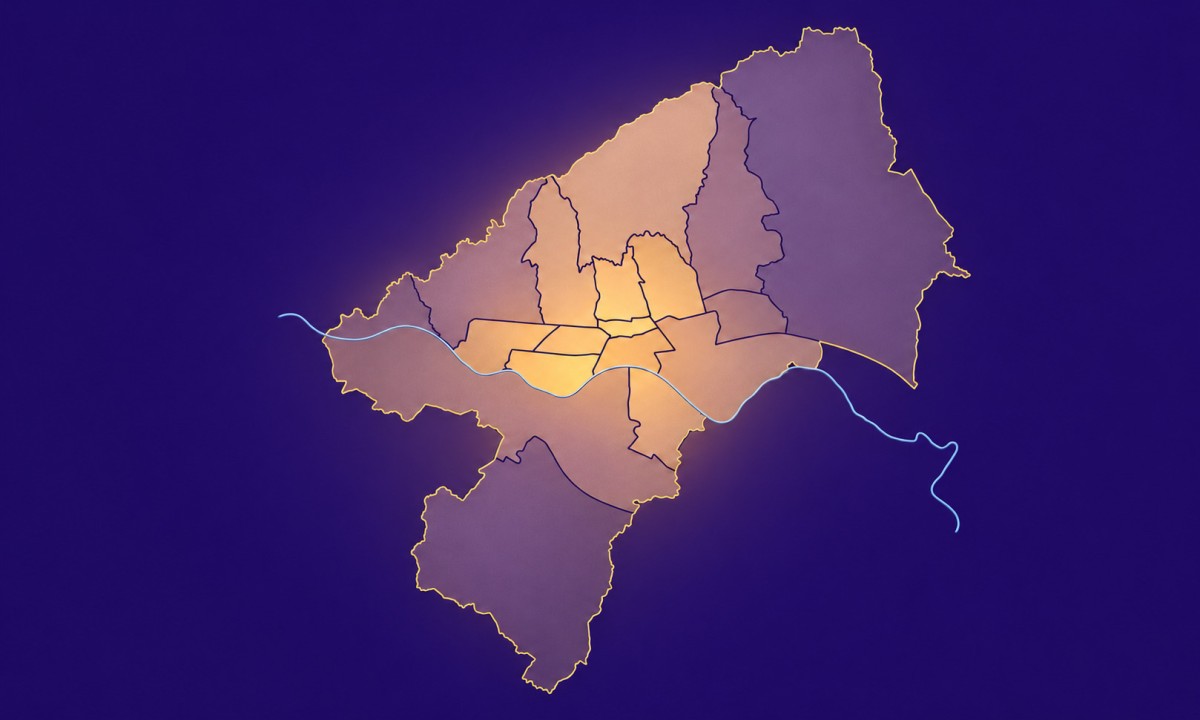
How much does location influence apartment prices in Zagreb,
and are newly built properties always more expensive than older ones? Our
colleague Vito Glavičić conducted a detailed analysis of advertised properties
to compare asking prices and highlight differences between Zagreb's city
districts.
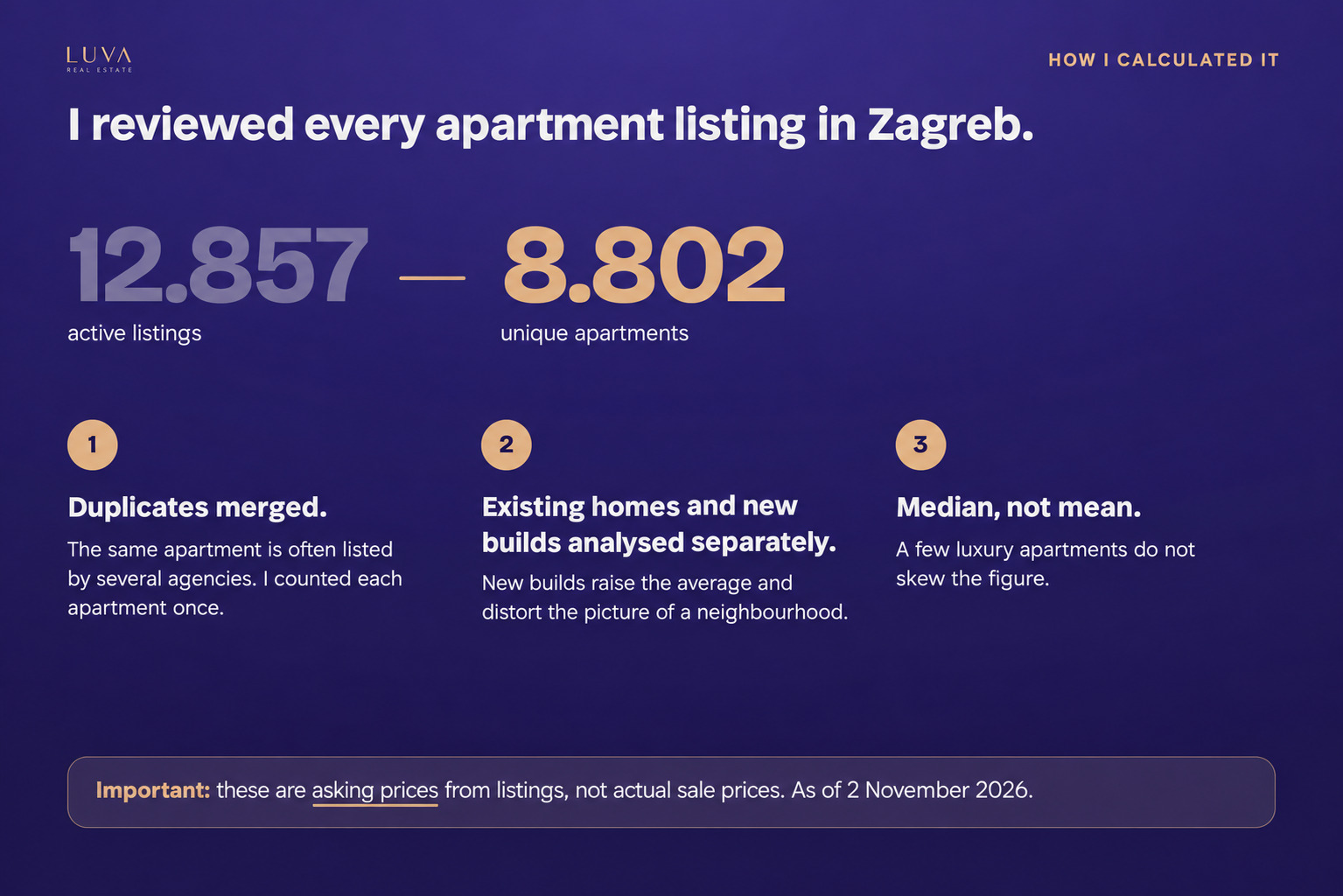
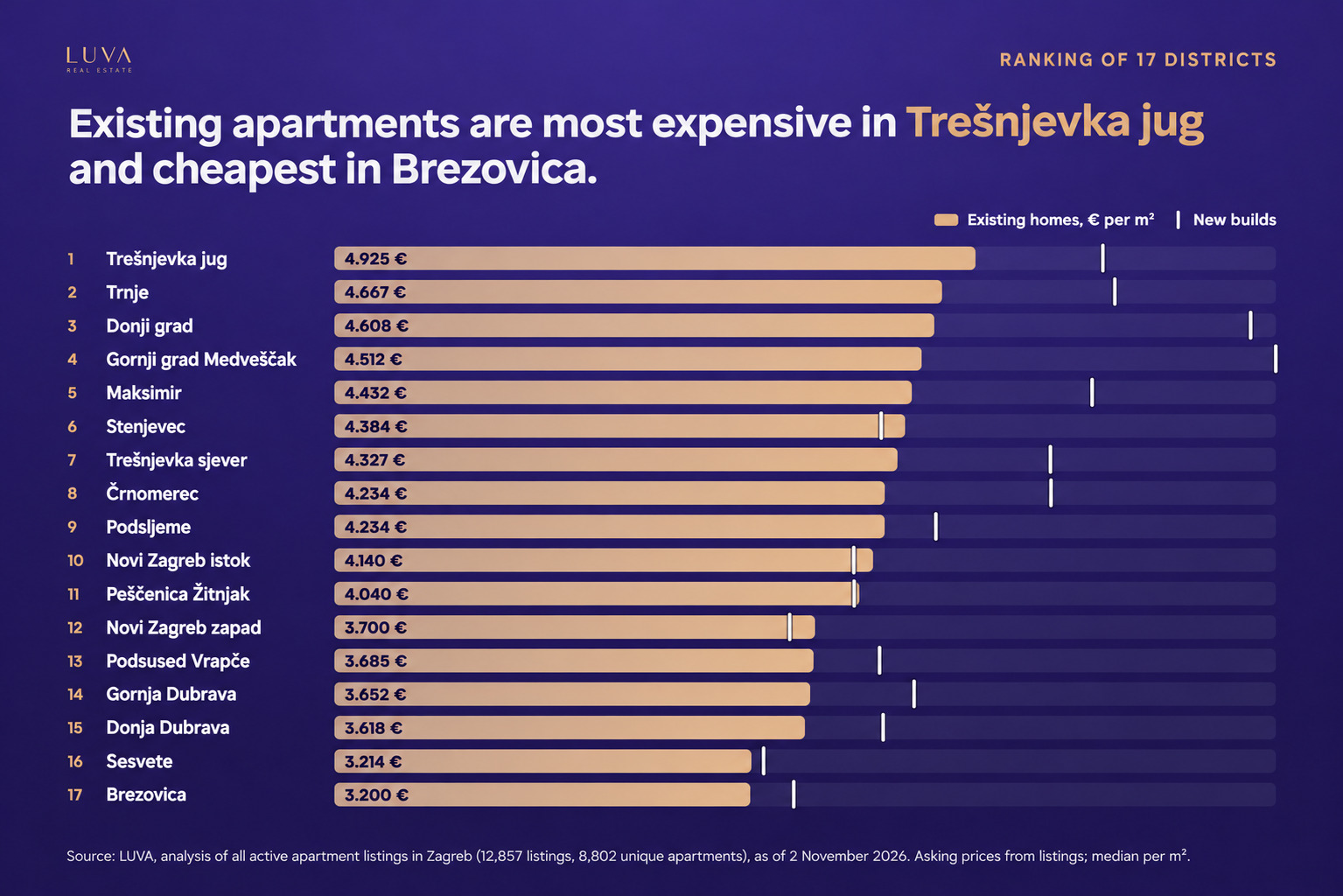
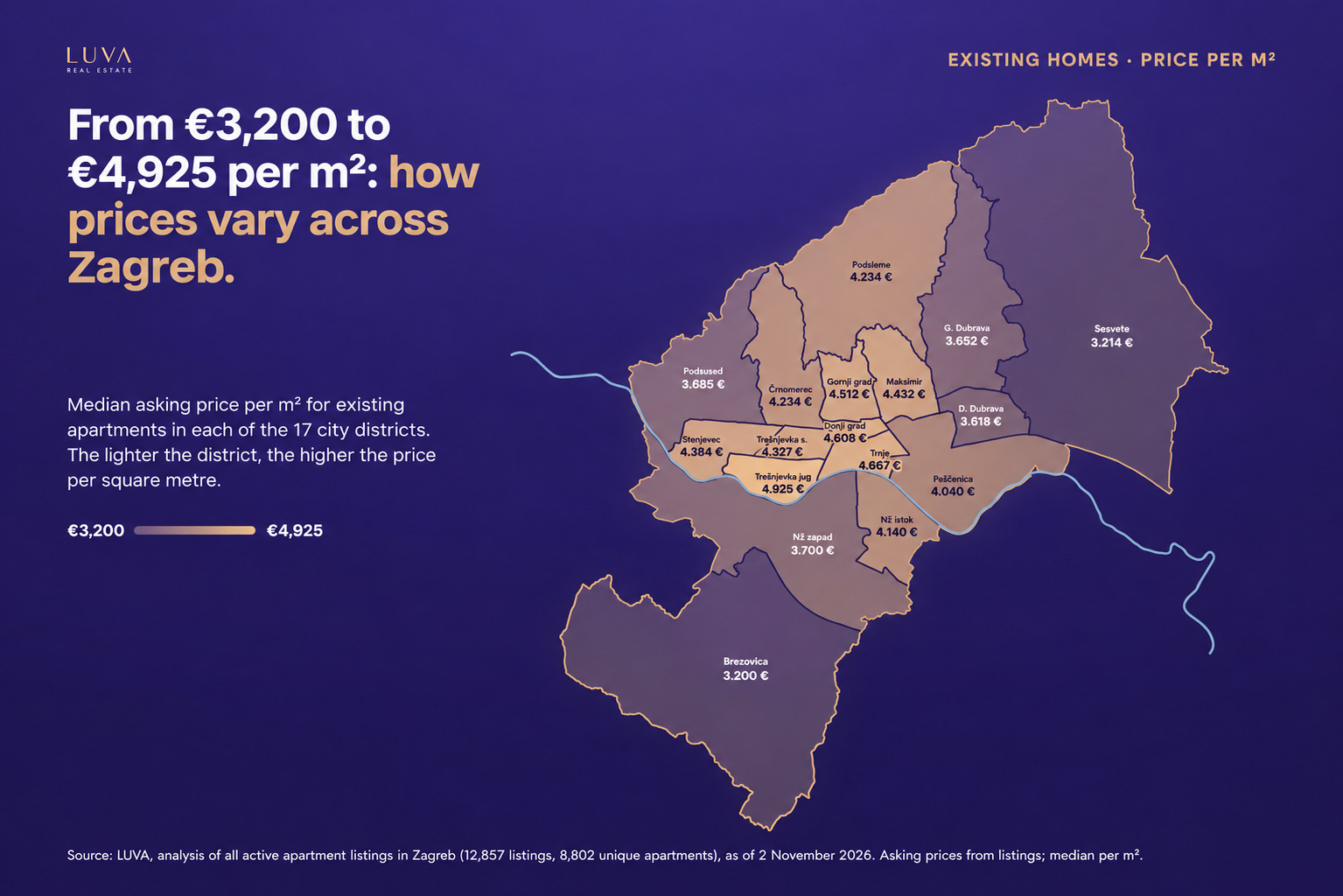
The analysis covered 12,857 active property listings across
all 17 city districts of Zagreb. Duplicate listings were removed, while
existing properties and new developments were analysed separately. The figures
presented reflect asking prices rather than actual transaction prices.
Apartment price comparison by city district
Below, we highlight selected findings from Vito's analysis.
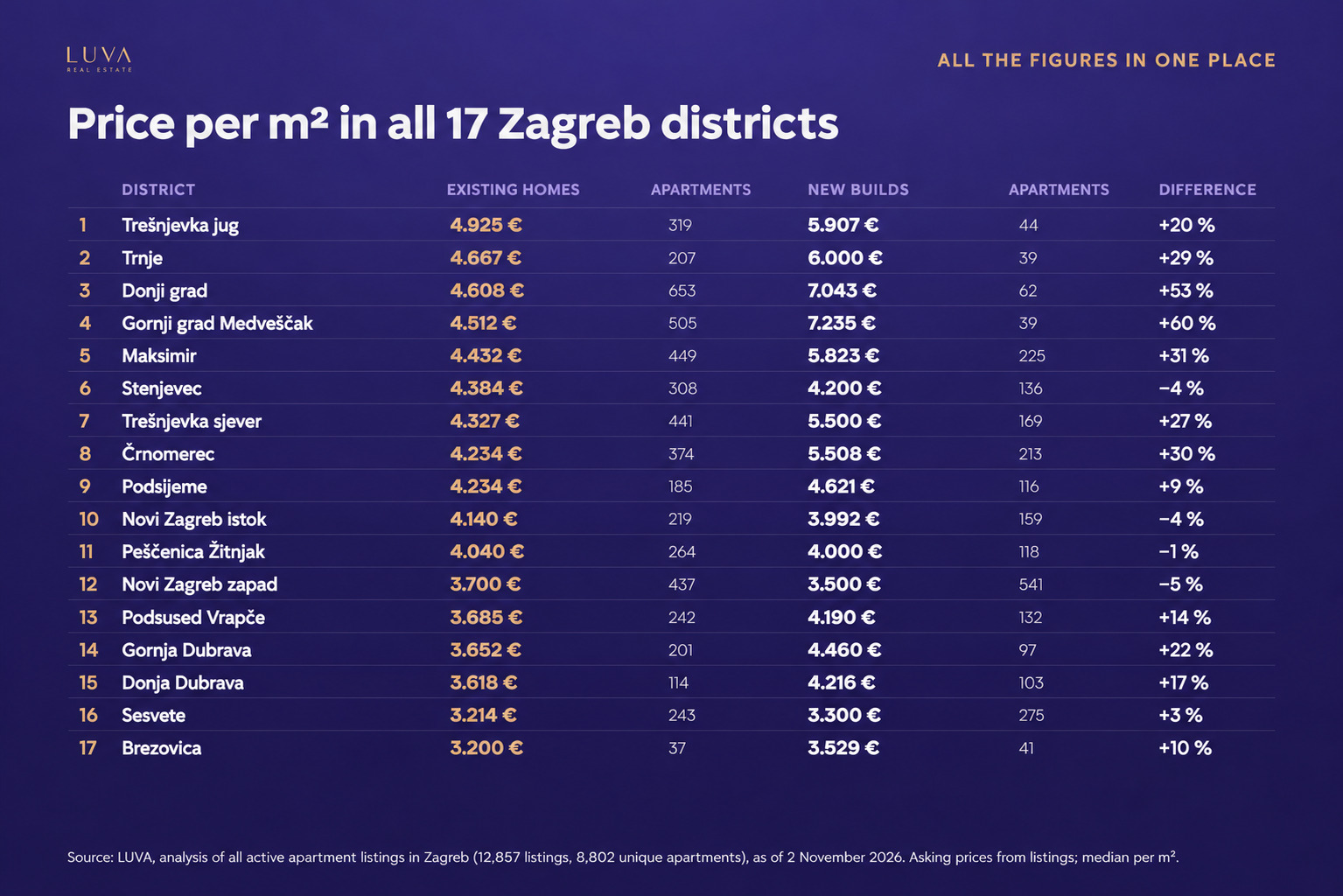
In Trešnjevka – Jug, the average asking price for existing
apartments is €4,925/m², while newly built apartments are advertised at
€5,907/m². Trnje records a similar price for new developments, at €6,000/m²,
compared with €4,667/m² for existing properties.
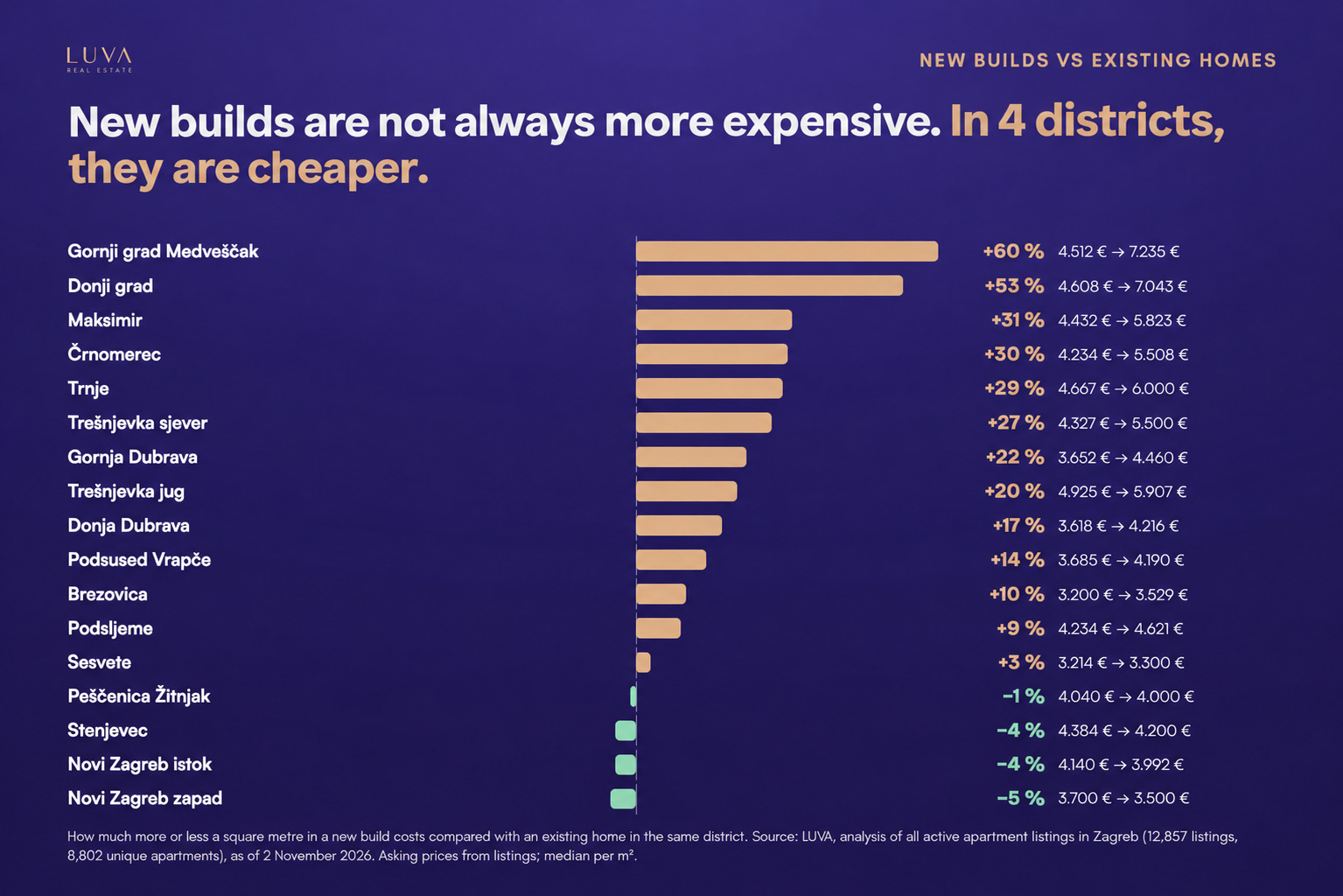
In Zagreb's central districts, the differences are more
pronounced. In Donji Grad, the average asking price for existing apartments is
€4,608/m², while new developments reach €7,043/m². In Gornji Grad – Medveščak,
existing properties average €4,512/m², compared with €7,235/m² for newly built
apartments. In Maksimir, asking prices stand at €4,432/m² for existing
apartments and €5,823/m² for new developments.
A different pattern emerges in Stenjevec, where the average
asking price for existing apartments is €4,384/m², compared with €4,200/m² for
newly built properties. New developments are also more affordable than existing
apartments in Novi Zagreb. In Novi Zagreb – Istok, existing apartments are
advertised at €4,140/m², while new developments average €3,992/m². In Novi
Zagreb – Zapad, asking prices stand at €3,700/m² for existing properties and
€3,500/m² for newly built apartments.
Among the more affordable districts included in this
comparison are Brezovica and Sesvete. In Brezovica, the average asking price
for existing apartments is €3,200/m², compared with €3,529/m² for new
developments. In Sesvete, the difference is even smaller, with existing
apartments advertised at €3,214/m² and newly built properties at €3,300/m². In
Gornja Dubrava, existing apartments average €3,652/m², while new developments
reach €4,460/m².
The highest asking price for existing apartments among the
selected districts was recorded in Trešnjevka – Jug, while the largest
difference between existing and newly built properties was observed in Gornji
Grad – Medveščak. Stenjevec and both Novi Zagreb districts demonstrate the
opposite trend, with newly built apartments advertised at lower average prices.
The sample size is also important when interpreting these
averages. The new-development listings included 41 apartments in Trešnjevka –
Jug, 38 in Trnje, 37 in Gornji Grad – Medveščak and 218 in Maksimir.
How can buyers use these findings?
When browsing property listings, the price per square metre
provides a useful starting point for comparison. However, two apartments of
similar size within the same district can differ significantly in quality and
in the overall costs associated with purchasing them.
For this reason, comparisons should go beyond the district
level and consider the specific neighbourhood and building. The structural
condition of the property and its common areas, floor level, lift availability,
orientation, layout, parking facilities and outdoor space are just some of the
characteristics that should be evaluated alongside the advertised price.
When considering an older apartment, it is advisable to
assess potential renovation costs in advance. Renovating a bathroom, replacing
installations or completely refurbishing an interior involve very different
levels of investment. Therefore, an identical initial asking price does not
necessarily mean an identical overall budget.
When comparing newly built apartments, it is equally
important to establish exactly what is included in the advertised price and
stated floor area. Storage rooms, garages, parking spaces, terraces and gardens
should be clearly specified to ensure a meaningful comparison between
properties.
What do these findings mean for sellers?
For property owners preparing to sell an apartment,
district-level data provides a useful initial reference point. The next step is
to identify properties that are genuinely comparable to their own.
An apartment in a renovated building with a lift and
designated parking should be evaluated according to its specific features. The
same applies to a property requiring substantial investment. A professional
property presentation should clearly communicate the apartment's advantages and
provide prospective buyers with sufficient information to make an informed
assessment.
At LUVA Real Estate, we use analyses such as this as a
foundation for discussing a property's position in the market. Each apartment
is then assessed individually, taking into account its characteristics,
documentation and competing listings.
Why is it important to distinguish between asking prices
and actual sale prices?
An asking price represents the seller's initial market
position. To understand the final outcome of a sale, separate data on completed
property transactions is required.
For buyers, the key question is what justifies a particular
asking price. For sellers, it is important to understand how their property
compares with other apartments that prospective buyers are considering at the
same time.
This is precisely where detailed market analysis and
individual property assessments can help both parties make decisions based on a
clearer understanding of the market.
If you are considering buying or selling an apartment in
Zagreb, the LUVA Real Estate team is at your disposal for a personalised
property valuation and professional advice tailored to your needs.